Title (title extra extra large)

Online Bachelor of Science in Speech, Language and Hearing Sciences

Column Title
Total tuition
Column Content
totalMarketedCost
Column Title
Duration
Column Content
duration
Column Title
Modality
Column Content
modality
Button (primary, tracking enroll)
Apply Now
Button Label
Open apply now modal window
Button (secondary, tracking rfi)
Get Program Details
Title (title extra large)

Overview

Column
Ref:column (content1)
Column
Ref:column (content2)
Title (title small)

Learn to help people communicate more effectively.

Content

Communication is a human right, yet millions of people struggle with speech, language, voice, swallowing, or hearing disorders that affect their ability to express themselves fully. In many cases, these issues go untreated.

By earning an online Bachelor of Science in Speech, Language and Hearing Sciences from Bradley University, you can embark on a rewarding career where you'll be working with patients across the lifespan to help them overcome these challenges.

Title (title large)

CALENDAR

Content

Application Deadline:
Summer 2026

4/15/2026


Fall 2026

7/15/2026


Upcoming Start Date:

May 20, 2026

Title (title large)

Online Bachelor of Science in Speech, Language and Hearing Sciences at a Glance

Content
  • Total Credits: 120 (including 45 credits of program core courses)
  • Transfer Credits Accepted: Up to 66 from accredited 2-year colleges and unlimited from 4-year institutions
  • Time to Completion: As few as 2.7 years (8 semesters) for core coursework and general education requirements
Title (title large)

Build a solid foundation in Speech, Language and Hearing Sciences

Our innovative program is designed to equip you with the foundational knowledge and skills to become an ethical and culturally sensitive pre-professional or assistant in speech, language and hearing sciences — or to pursue graduate education and higher-level opportunities in speech-language pathology.

Combining problem-based learning, simulation experience, and hands-on clinical opportunities, coursework can help prepare you for graduate school or speech-language pathology assistant certification.

One of the distinguishing features of Bradley's program is our strong focus on training the clinicians of tomorrow.

Our curriculum includes a guided observation course plus two optional real-world courses that offer you the opportunity to acquire valuable supervised clinical experience.

You can complete your core coursework and general education requirements in as few as 2.7 years (8 semesters).


Icon
Picture, Picture
Content
Experience-Driven
Icon
Picture, Picture
Content
Future-Focused
Icon
Picture, Picture
Content
Supportive
Icon
Picture, Picture
Content
Transfer-Credit Friendly
Icon
Picture, Picture
Content
Flexible and Convenient
Title (title large)

Why choose Bradley for your Bachelor’s in Speech, Language and Hearing Sciences?

Content

Bradley University has been shaping leaders and innovators since 1897. Continuously driven by our commitment to excellence in teaching, research, and learning, we've designed our speech and language program to combine rigorous academics with real-world practice.

A Bradley education is founded in a rich culture of collaboration, support, and shared values intended to challenge you to grow personally and professionally. We continue to earn high marks for our outstanding faculty and student-centered approach to learning.

When you choose Bradley's Speech, Language and Hearing Sciences program, you'll have access to the resources and tools to help you attain your goals, including:

  • Dedicated faculty members who have years of clinical and academic experience. These mentors will be there for you not only beyond office hours, but beyond graduation.
  • Small class sizes and the personalized support to help you thrive.
  • A collaborative environment where you can learn from and alongside like-minded professionals who share your vision for a brighter future.
  • Learning beyond the classroom where you can hone your skills through supervised clinical experiences.
Column
Ref:column (content)
Column
Ref:column (image)
Image
A woman explains something with hand gestures to a young child with magnet letters on a table between them.
Title (title large)

Online Post-Baccalaureate SLHS Leveling Certificate in Speech, Language and Hearing Sciences

Content

If you have a bachelor's degree in an area unrelated to speech-language pathology or hearing sciences but would like to pursue a graduate degree in this field, Bradley offers an SLHS Leveling Certificate that can prepare you for an advanced degree program.

Our SLHS Leveling Certificate is designed to equip you with the background required for most master's programs.

It consists of 7 courses totaling 21 credits and can be completed in as few as 9 months (2 semesters).

Button (primary)
Learn more
Button Label
Learn more
Title (title large)

Why should you pursue a Bachelor of Science in Speech, Language and Hearing Sciences?

If you're passionate about helping others and making a positive impact in your community, then a career as a speech-language pathology assistant or a position in hearing sciences can be a great choice.

Earning a Bachelor of Science in Speech, Language and Hearing Sciences can help you qualify for a number of assistant roles in the field, where you can work in settings such as schools and clinics and gain valuable hands-on experience.
This degree helps equip you with the necessary prerequisites to be eligible for admission into a speech-language pathology or audiology graduate program. An advanced degree is required to work in roles such as a speech-language pathologist or audiologist, so many bachelor's degree recipients continue on to graduate school to further their education.
Image
Picture, Picture
Text (copy extra small)
Higher Learning Commission
Title (title extra large)

Careers

Title (title small)

Choose a career path with life-changing potential

Content

Speech, language and hearing science professionals can have a profound impact on people's lives. Clinicians treat patients across the lifespan who have disorders affecting their swallowing, speech, language, learning, and cognition, helping to build critical skills and facilitate communication.

Bradley University's online speech, language and hearing sciences bachelor's program is designed to give students the foundational knowledge and skills they need to embark on this rewarding career path.
Column
Ref:column (content)
Column
Ref:column (image)
Image
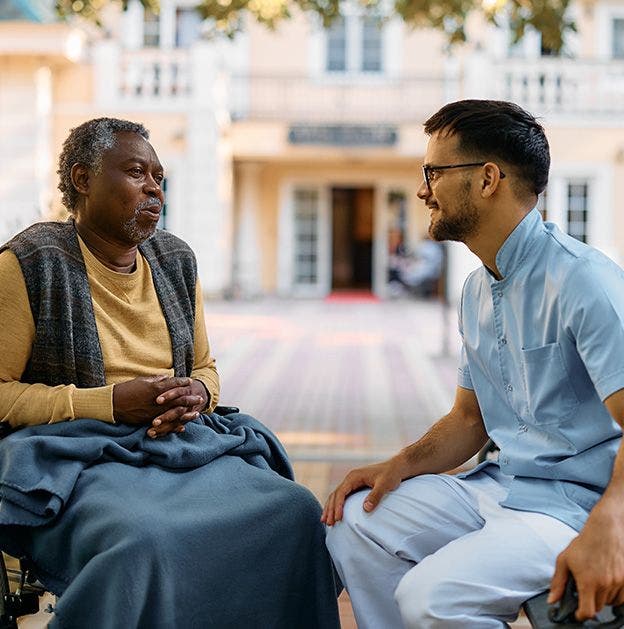
An elderly Black man in a wheelchair talks with a young male caregiver outside a building.
Title (title large)

What can you do with a bachelor's degree in speech, language and hearing sciences?

Content

Most bachelor's degree holders will apply to graduate school to pursue an advanced degree in a subject like speech-language pathology or audiology.

Attaining a master's (and/or doctoral degree if required) can unlock greater career opportunities and earning power, typically as speech-language pathologists (SLPs) or audiologists.

However, for those whose goal is to start working sooner, a bachelor's degree can also open doors to assistant-level roles in the field.

Summary
Speech-Language Pathologist Assistant (SLPA) | Average salary: $47,545*
Main Content

SLPAs work under the direction of a licensed speech-language pathologist (SLP), assisting with screening patients, carrying out treatment plans, and providing administrative and clerical support.

Please note, in addition to the bachelor's degree, you may have to fulfill other requirements to become an SLPA. These are set by your state of residence and the American Speech-Language-Hearing Association (ASHA).

*(Source: Indeed)

Summary
Audiology Assistant | Average salary: $91,638*
Main Content

An audiology assistant supports an audiologist in their treatment of patients with hearing and/or balance disorders. The role can involve some diagnostic and hands-on clinical care, as well as administrative work including scheduling appointments, taking patient histories, and documenting treatment plans.

*(Source: Salary.com)

Column
Ref:column (content)
Column
Ref:column (image)
Title (title large)

What's the job outlook?

Content

While you typically need a graduate-level education to pursue high-level positions, bachelor's graduates who go on to earn their advanced degrees in speech, language and hearing sciences often become speech-language pathologists (SLP) or audiologists.

From 2024 to 2034, employment is projected to grow by 15% for speech-language pathologists and 9% for audiologists — much faster than the average rate of 3% across all professions.

(Source: BLS - Speech-Language Pathologists/Audiologists)

Title (title large)

Where can you work?

Content

Speech, language and hearing science professionals are employed in both healthcare and educational settings. These include:

  • Hospitals
  • Clinics
  • Public schools (K-12)
  • Private schools (K-12)
  • Specialty rehabilitation facilities
  • Private practice
  • Department of Defense accredited schools
Title (title large)

What skills and qualities do you need?

Content
  • Communication skills: To explain information clearly, including test results and proposed treatments, so that patients understand their diagnosis and options.
  • Empathy: To demonstrate compassion and understanding to patients who may be frustrated by their communication disorders.
  • Analytical skills: Clinicians must select appropriate diagnostic tools and evaluate results to identify goals and develop a treatment plan.
  • Interpersonal skills: To build trusted relationships with patients, their families and other healthcare providers.
  • Problem-solving skills: To determine the causes of swallowing, speech, language, hearing, or cognitive disorders and determine appropriate treatment plans. Clinicians must also be able to propose alternatives if patients don’t respond to initial treatment.
Title (title large)

Explore additional career paths

Image
Name (title small)

How to Become a Speech-Language Pathologist (SLP)

Content
Find out how to become a speech-language pathologist (SLP) with this guide covering education requirements, the praxis exam, SLP certifications, and more.
Button (secondary, icon)
READ MORE
Button Label
READ MORE
Image
Name (title small)

Speech-Language Pathologist (SLP) Specializations

Content
What SLP specializations are there? Break down communication barriers faced by patients globally, including pediatric SLP, adult neurogenic disorders, voice, and fluency.
Button (secondary, icon)
READ MORE
Button Label
READ MORE
Title (title extra large)

Curriculum

Content
Bradley University's online Bachelor of Science in Speech, Language and Hearing Sciences is designed to equip you with the foundational knowledge to embark on a rewarding career where you can play a key role helping people overcome communication barriers such as speech, language, voice, swallowing, or hearing disorders.
Title (title large)

What can you learn in the speech, language and hearing sciences program?

Content

The 120-credit curriculum includes 15 required courses (45 credits) on topics related to speech-language pathology, audiology, and hearing sciences, as well as an additional required course on clinical neuroanatomy.

The program also includes two optional supervised clinical experiences which are geared toward students who plan to pursue graduate school and/or an entry-level position in the field. The remainder of the curriculum consists of general education courses and general electives.

The full breakdown is as follows:

  • Required program core courses: 45 credits
  • Required clinical neuroanatomy course: 3 credits
  • General education course: 45 credits
  • General electives: 21 credits
  • Experimental learning courses: 6 credits

The time it takes to earn your degree will vary depending on how many credits you transfer and how many credits you take each semester. However, you can complete your core coursework and general education requirements in as few as eight semesters (less than three years).

Title (title large)

Program core courses

Summary
CSD 200 Introduction to Communication Sciences and Disorders / 3 Credits
Main Content
An introduction to typical and disordered Speech, Language and Hearing Sciences in children and adults. Ethical standards for the practice of speech-language pathology, information regarding certification, specialty recognition, licensure and professional credentials in Speech-Language Pathology will be presented.
Summary
CSD 201 Phonetics / 3 Credits
Main Content
A study of Articulatory Phonetics of English including the classification system underlying the International Phonetic Association as it relates to the profession of speech-language pathology.
Summary
CSD 202 Cultural and Linguistic Diversity and Language Development / 3 Credits
Main Content
This course will cover the complexities of cultural and linguistic differences across speech and language development from infancy to early school-age years. This course will examine the theories and components of the language system (phonology, semantics, syntax, and pragmatics) as it relates to the profession of speech language pathology.
Summary
CSD 203 Anatomy and Physiology of the Speech and Hearing Mechanism / 3 Credits
Main Content
A study of the anatomical and physiological bases of human communication and swallowing, including the support structures of the respiratory, articulatory, phonatory, and swallowing systems, and the identification and function of muscles in these systems.
Summary
CSD 300 Speech and Hearing Science / 3 Credits
Main Content
A study of the physical concepts related to sound and voice, the acoustics of voice production and sound, psychoacoustics, and theories of speech perception and production.
Summary
CSD 301 Audiology / 3 Credits
Main Content
A study of basic anatomy and physiology of the human auditory system, fundamental hearing science, and methods and techniques of hearing measurement and interpretation for the assessment, diagnosis, evaluation, and rehabilitation of hearing disorders.
Summary
CSD 302 Aural Rehabilitation / 3 Credits
Main Content
A study of the habilitation and rehabilitation techniques for individuals diagnosed with a hearing disorder. Specific areas of interest include hearing evaluation techniques, speech and language development for the hearing impaired, hearing aid amplification, cochlear implants, and central auditory processing. Prerequisite: CSD 301.
Summary
CSD 303 Evidence-Based Intervention / 3 Credits
Main Content
A study of evidence-based intervention approaches for instructional planning for children with communication disorders.
Summary
CSD 304 Language Disorders / 3 Credits
Main Content
A study of disorders of language acquisition and usage in children and adolescents, with emphasis upon the nature, assessment, and treatment of such disorders. Prerequisite: CSD 202.
Summary
CSD 305 Articulation and Phonology / 3 Credits
Main Content
A study of the etiology, diagnosis, and therapeutic management of functional and organically based articulatory and phonological impairments. Prerequisite: CSD 201.
Summary
KHS 362 Essential Clinical Neuroanatomy / 3 Credits
Main Content
The purpose of this course is to provide the undergraduate student with an introduction to the human nervous system. This introductory course is designed for pre-health career students and is focused on pertinent neuroscience material including neuroanatomy, neurophysiology, and disorders of the human nervous system. Emphasis is put on the relationship between structure and function, focusing on the basic neurological examination. A key goal of this course is to provide students with introductory knowledge for engaging in basic clinical problem-solving, by applying neuroanatomical principles to case studies of neurological disorders. Students will also be introduced to the cross-disciplinary nature of studying the human nervous system and will appreciate how neuroanatomical concepts are used in clinical practice across several disciplines.
Summary
CSD 401 Clinical Methods and Procedures: Treatment / 3 Credits
Main Content
A study of clinical procedures including goal writing, lesson planning, writing SOAP notes, report writing, progress monitoring, and ethical conduct. Legislative, regulatory, and reimbursement issues that affect the practice of speech-language pathology in educational and medical settings will be presented. Prerequisites: CSD 304, CSD 305, Speech, Language and Hearing Sciences majors, or consent of the department chair.
Summary
CSD 402 Clinical Methods and Procedures: Diagnostics / 3 Credits
Main Content
A study of diagnostic methods for the disorders of speech and language. Professional topics such as the HIPAA policies and procedures, ethical standards and conduct, psychometrics, multi-cultural considerations, interviewing, and reporting will be discussed and practiced. Prerequisites: CSD 305, CSD 304, Speech, Language and Hearing Sciences majors, or consent of the department chair.
Summary
CSD 404 Neuroscience for Communication Disorders / 3 Credits
Main Content
A study of the foundations of neuroanatomy and neurophysiology relevant to speech, language, cognition and swallowing. Prerequisites: Speech, Language and Hearing Sciences majors and minors, or consent of the department chair.
Summary
CSD 405 Introduction to Voice and Fluency Disorders / 3 Credits
Main Content
A study of basic theories and principles in the onset, development and maintenance of stuttering and voice disorders in children and adults. Principle factors in prevention, measurement, assessment and management of voice and fluency disorders. Prerequisites: Speech, Language and Hearing Sciences majors and minors, or consent of the department chair.
Summary
CSD 450 Guided Observation / 3 Credits
Main Content
Guided clinical observations of assessment and intervention of individuals who have communication disorders. In this course, students will increase their understanding of describing and summarizing behaviors relevant to the study of communication disorders. This course also provides the opportunity for observation hours as required by the American Speech-Language-Hearing Association. Prerequisites: Speech, Language and Hearing Sciences majors and minors, or consent of the department chair.
Title (title large)

Experiential learning courses

Summary
CSD 451 Clinic I / 3 Credits
Main Content
A supervised clinical experience in basic intervention procedures for children and/or adults. Discussion will focus on methods of addressing challenging behaviors, enhancing client motivation, and exploring the range of service delivery options for each clinical setting. Students will obtain supervised clinical experience.
Summary
CSD452 Clinic II / 3 Credits
Main Content
A supervised clinical experience in basic intervention procedures for children and/or adults. Discussion will focus on methods of addressing challenging behaviors, enhancing client motivation, and exploring the range of service delivery options for each clinical setting. Students will obtain supervised clinical experience.
Summary
EHS 301 Cooperative Education or Internship in EHS / 3 Credits
Main Content
Cooperative education or internship experience. May be repeated to a combined total of 9 credit hours. Pass/Fail. Prerequisites: Sophomore standing in the College of Education and Health Sciences, 2.0 Bradley overall grade point average and EHS cumulative grade point average, consent of EHS Co-op and Internship coordinator and Co-op and Internship faculty advisor.
Content (copy extra small)
*Students planning to pursue graduate school for speech-language pathology, audiology, or hearing sciences are encouraged to take CSD 451 and CSD 452. Those not planning to continue in the field can substitute two cooperative education or internship experiences (EHS 301) for a total of six credits to fulfill the experiential learning requirement.
Title (title extra large)

Admission requirements

Content

Here are the requirements to be considered for admission to the online Bachelor of Science in Speech, Language and Hearing Sciences program.

First-year applicants:

  • Completed application
  • Unofficial high school transcript
  • Statement of interest/personal statement

Transfer applicants:

  • Completed application
  • Unofficial transcripts from every postsecondary institution attended (unofficial high school transcripts may also be required)

In addition to the above, submission of the following items is optional:

  • Resume or CV (recommended for candidates who have not been in education recently)
  • One letter of recommendation (you may elect to include a letter from a teacher, school counselor, coach, or school activity advisor; No specific form is required)
Column
Ref:column (content)
Column
Ref:column (image)
Image
Aerial view of the Bradley University campus in autumn, featuring modern and historic buildings and vibrant fall foliage.
Title (title extra large)

Gain insights from leading communication science professionals

Content
Bradley’s Speech, Language and Hearing Sciences faculty members are passionate educators and accomplished practitioners who bring their clinical and research expertise directly to the online classroom. They’re dedicated to your growth, helping you build the knowledge, confidence, and compassion essential for a successful career supporting individuals with communication and hearing needs.
Button (primary)
Meet Our Faculty
Button Label
Meet Our Faculty
Connect
{xf::fragments/connect}
Image

Smiling man in a grey "BRADLEY" shirt with a fist raised against a red, white, and blue background.