A Phoenix Rising: Laura Nelson’s Return to Education
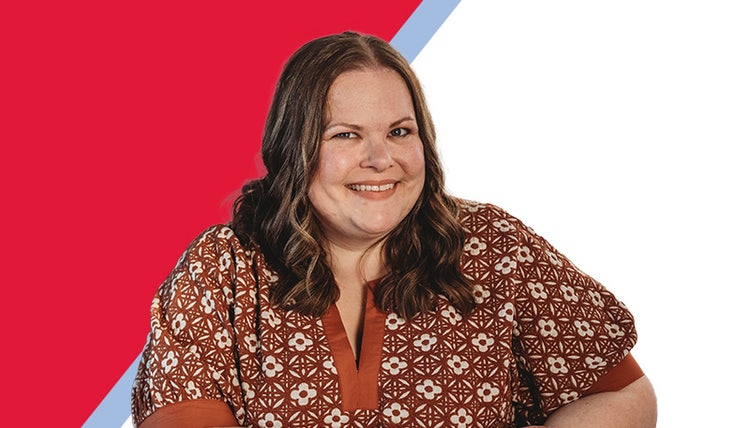
Laura Nelson
Bachelor of Science in Speech, Language, and Hearing Sciences
Growing up on a family farm, Laura Nelson always knew a helping profession was her calling. After high school, she pursued physical therapy, a path inspired by her own experiences with sports injuries. However, her journey took an unexpected turn when she left DPT school to focus on her mental health.
For the next two decades, Laura worked various jobs, always feeling a pull drawing her back toward her original goal. A previous attempt to complete a speech and language program was cut short, but a later ADHD diagnosis provided new clarity.
Encouraged by her best friend, a speech-language pathologist with 15 years of experience, Laura decided the time was right to return to her educational pursuits. As a Bradley University alumna, she felt a natural connection and was impressed by the supportive interactions during the admissions process. Now, she is pursuing a second bachelor's degree in Speech, Language, and Hearing Sciences, ready to complete the journey she started.
We spoke with Laura to learn more about her path and her experience in the program.
What was the tipping point that inspired you to earn your degree now?
The tipping point in my life that inspired the pursuit of this degree was the ongoing battle with chronic back pain, which makes being on my feet for 12 hours a day in food service management unsustainable. My best friend has gently prodded me to go back to school for the last several years to become an SLP or an SLPA to work with her. I decided on a second bachelor's degree to have the flexibility to pursue a graduate program or work as a speech therapy assistant.
What does having a good education mean to you?
Having a good education means that I am prepared to face the challenges of the world and be successful in my chosen profession. It has been a winding path to get here, but this educational experience has shown me the value of working closely with your professors and advisors.
How did you feel before starting your program, and how do you feel now?
I was arrogant before starting this program. I thought returning to being a full-time student after being out of school for 15 years would be easy. Now, I am thriving. I have found my rhythm by dedicating three days a week strictly for school. I am putting in the work to get to the end goal.
What challenges did you overcome during the program?
My first semester back in school was rough. To be successful in the program, I had to take a long look at my priorities. Beginning with my summer course load, I changed my availability at work. I have a dedicated study area that minimizes distractions and provides relative quiet. I have improved my time management skills as well.
What has the process of earning your degree taught you about yourself?
I referred to myself as a phoenix recently. In September 2024, I burnt life as I had known it for the previous six years to the ground. The process of rebuilding taught me that I am resilient, determined, and tenacious.
Why did you choose this program at Bradley over others?
In September of 2024, I began looking at SLPA certificate programs. I contacted the institution where I had completed 85% of the program to see what it would take to complete the degree. I began researching other CSD programs after one conversation with the department chair at the other institution. I found Bradley now offered a CSD program during that research. I contacted Bradley about their program because my first bachelor's degree was from Bradley. The interactions with everyone during the admissions process cemented my decision to choose Bradley.
How do you stay motivated while achieving your goals?
I am not sure I truly understood my own motivators before I began this program at Bradley. I have found my passion is helping people communicate. Giving children with speech and language disorders a means to communicate with the world around them keeps me pushing through the coursework. I also have built an amazing support system. When I lose faith in myself, they are there to pick me up and remind me that I am closer than I think to achieving my goals.
How has the university shown you support?
As I mentioned, my transition back to being a full-time student was rough. One of the professors reached out when I did not submit the first assignment on time. This showed me that it was OK to ask for help. I reached out to the department chair and the other professors, and I got back on track.
When academic advising time came for summer classes, I met with my advisor, and we talked through some of my struggles. She gave her suggestions. Some I took, and some did not work for me. She is helping me work through the application process for graduate school. The department chair, Mrs. [Ashley] Alexander, has been supportive since her first email with me last year. She checked in throughout the spring semester, provided support over the summer, and continues to support me during my clinical practicum this fall. I know that if I need to ask for help, she is an email away.
How will you use your degree, and what impact do you want to have?
I plan to become a school-based SLP. I want to help as many children as I can with their communication struggles. If a child is unable to speak, I want to show them and their parents that viable alternatives exist. The ability to successfully communicate does not look the same for everyone. It may mean speaking for some, while for others an AAC device or sign language will be their means of communication.
Have you been able to apply what you’ve learned in your program in your career or life?
I am still in school, so I have not had the opportunity yet. However, my mom is also a speech therapist, and there are things I’ve learned as part of my coursework that she has now learned or researched too because I brought them up with her.
Is earning your degree worth it? Why or why not?
Yes, the degree is worth it. Beyond the fact that it is a requirement in many states to become an SLPA or for graduate school admission, I have had the opportunity to learn from experienced clinicians who are passionate about helping others communicate to their fullest ability. The nuggets of wisdom each professor shares with students help mold us into the best future clinicians we can be.
What advice do you have for future students?
Online classes are what you make them. They are not the easy way out. Do not be shy in reaching out to the professors when you need help. Every single one of them will take the time to explain something to you — or point you in the right direction to discover the answers for yourself.
Seize Your Opportunity
Has Laura’s story inspired you? If you’re ready to explore a career in speech, language, and hearing sciences, check out our program page for full details of our online bachelor’s degree.
Discover our online Bachelor of Science in Speech, Language and Hearing Sciences.